Evaluating the Practical Value of Lily Pond Clipart for Design Projects
In the realm of digital design, specific thematic assets often serve as the cornerstone for a cohesive visual identity. When working on projects that require a touch of nature, tranquility, or botanical elegance, Lily Pond Clipart emerges as a highly relevant resource. Unlike generic stock photography, which can sometimes feel impersonal or difficult to integrate into custom layouts, curated clip art offers distinct advantages in terms of flexibility and stylistic consistency. This collection is not merely a set of images; it represents a toolkit for designers, scrapbookers, and content creators who need high-quality, transparent elements to build complex compositions without the constraints of rigid backgrounds.
The utility of this specific asset pack lies in its ability to bridge the gap between professional illustration and accessible digital resources. Whether you are designing a wedding invitation suite, creating educational materials about aquatic ecosystems, or developing marketing collateral for a spa, the visual language of a lily pond conveys serenity and natural beauty. However, the true value of Lily Pond Clipart is found in the technical execution and the versatility of the files provided. For professionals managing tight deadlines, the difference between a usable asset and a frustrating one often comes down to resolution, file format, and background transparency.
Technical Specifications and File Quality
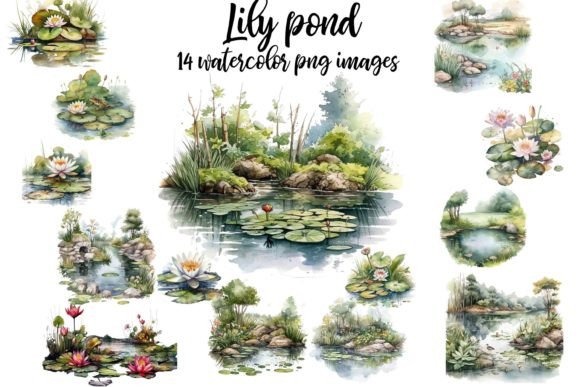
When assessing any digital asset library, the first point of analysis must be the technical specifications. The Lily Pond Clipart collection delivers 14 high-quality digital elements, each saved as a separate PNG file. This separation is a critical feature for workflow efficiency. In many design scenarios, having individual components—such as a single water lily, a cluster of pads, or a dragonfly—allows for greater compositional control compared to a single rasterized image where elements cannot be moved independently.
The resolution of these files is specified at approximately 300 PPI (pixels per inch). This is the industry standard for print production. For designers preparing materials for offset printing, large-format posters, or high-end brochures, 300 PPI ensures that the edges remain crisp and the details do not pixelate when scaled to size. A common pitfall with free or low-cost clip art is a lower resolution, such as 72 PPI, which is acceptable for web use but disastrous for print. By providing 300 PPI files, this collection supports a dual-purpose workflow: the same assets can be used for a physical Lily pond poster and then resized down for a website banner without quality degradation.
Furthermore, the inclusion of a transparent background in every file is essential for modern design software. Transparent PNGs allow the artwork to sit seamlessly over various textures, gradients, or photographic backgrounds. This eliminates the need for time-consuming masking or "magic wand" selections in Photoshop or GIMP. For a Pond illustration intended to overlay a textured paper background in a scrapbook layout, or to float above a gradient sky in a web header, the transparency ensures a professional finish immediately upon import.
Stylistic Versatility: Watercolor and Illustration
A significant portion of the appeal in this collection stems from its aesthetic style. The description highlights a Lily pond watercolor approach, which is particularly effective for evoking emotion and softness. Watercolor textures are currently in high demand across several creative sectors, including stationery design, branding for wellness products, and children's book illustrations. The organic, fluid nature of watercolor art contrasts beautifully with clean, geometric typography, creating a balanced visual hierarchy.
For photographers and graphic designers, integrating a Lily pond image with a watercolor texture can soften the harsh lines of digital interfaces. Imagine a blog post about mindfulness; a stark vector graphic might feel too corporate, whereas a watercolor lily pad adds a human, handcrafted touch. This stylistic choice also aids in brand differentiation. While many competitors may rely on hyper-realistic stock photos, using stylized Pond clipart allows a business to establish a unique visual voice that feels curated and artistic rather than generic.
The collection's versatility extends to how these elements interact with other media. Because the designs are distinct yet thematically linked, they can be layered to create depth. A designer might place a dark green lily pad in the foreground with a lighter bloom behind it, creating a sense of perspective that is difficult to achieve with flat icons. This layering capability makes the Lily Pond Clipart suitable for both simple logo marks and complex scene compositions.
Real-World Applications and Workflow Integration
Understanding the practical application of these assets is vital for determining their return on investment. For small business owners and entrepreneurs, time is a premium resource. The ability to download a set of 14 ready-to-use elements significantly accelerates the production cycle. Consider a scenario where a florist needs to create a seasonal flyer for Mother's Day. Instead of commissioning a custom illustrator or spending hours searching for compatible stock photos, they can utilize the Lily pond clipart to assemble a cohesive design in minutes.
Scrapbookers and hobbyists also benefit immensely from the format of these files. Digital scrapbooking requires layers of images, papers, and embellishments. The separate PNG files allow users to drag and drop individual lilies or frogs onto their digital pages, rotating and resizing them as needed. The transparency ensures that the white borders often found in JPEGs do not mar the final composition. This level of control transforms a static image into a dynamic design element.
For educators and publishers, the Lily pond image serves an instructional purpose as well. Creating worksheets about life cycles, habitats, or botany requires clear, uncluttered visuals. The clean lines and distinct shapes within this clip art set make it ideal for coloring pages or labeling exercises. The high resolution ensures that even when printed on standard office printers, the text and lines remain legible, supporting the creation of professional-grade educational materials.
Who Benefits Most from This Collection?
While the Lily Pond Clipart has broad appeal, it is particularly well-suited for specific audiences. Professional graphic designers looking for quick mockup assets will find the 300 PPI resolution and transparent backgrounds indispensable. Freelancers offering services like social media management can use these images to create branded content for clients in the gardening, wellness, or home decor niches without needing original photography.
Bloggers and content creators focusing on lifestyle, DIY, or nature topics will appreciate the aesthetic value of the Lily pond watercolor style. These images can serve as featured posts, section dividers, or decorative headers that enhance the reading experience. Similarly, publishers producing greeting cards, journals, or planners can license or purchase these assets to add a consistent visual theme to their product lines.
However, there are limitations to consider. If a project requires photorealism—for instance, a scientific textbook requiring accurate anatomical details of a specific lily species—a stylized watercolor illustration may not suffice. Additionally, while 300 PPI is excellent for standard print sizes, extremely large format prints (like billboards) may still require vector-based graphics to maintain absolute sharpness at massive scales. Users should evaluate the scale of their project before committing to raster-based clip art for oversized applications.
Long-Term Value and Consistency
The long-term value of Lily Pond Clipart lies in its consistency. Once a designer adopts a specific visual style, maintaining that look across multiple campaigns is crucial for brand recognition. Having a dedicated set of 14 elements ensures that all future projects involving this theme will share the same color palette, brush stroke texture, and lighting logic. This consistency builds trust with the audience and creates a polished, professional appearance.
Moreover, the non-destructive nature of working with separate PNG files means these assets can be revisited and repurposed years later. A design created today for a summer event can be adapted next year for a different campaign simply by rearranging the existing elements. This reusability maximizes the utility of the initial investment, making the collection a sustainable addition to a digital asset library.
In conclusion, the Lily Pond Clipart collection represents a robust solution for those seeking high-quality, versatile nature-themed graphics. Its combination of 300 PPI resolution, transparent backgrounds, and watercolor aesthetics addresses the core needs of modern designers, educators, and creators. By offering individual, high-fidelity files, it empowers users to craft professional compositions efficiently, whether for web, print, or personal projects. For anyone looking to infuse their work with the serene beauty of a pond without compromising on technical quality, this resource offers a practical and effective path forward.