House Like Ornamental Emblem, Letter J: A Practical Guide to Vector Monogram Design
In the realm of digital design assets, specific vector elements often serve as the foundation for complex branding and decorative projects. The House Like Ornamental Emblem, Letter J is one such resource, offering a unique intersection of architectural motifs and typographic elegance. This single vector artwork is designed to function as a versatile building block for creators ranging from professional graphic designers to hobbyist crafters. Understanding its technical specifications, aesthetic characteristics, and practical applications allows users to evaluate whether it fits their specific project requirements compared to other available design formats.
Defining the House Like Ornamental Emblem, Letter J
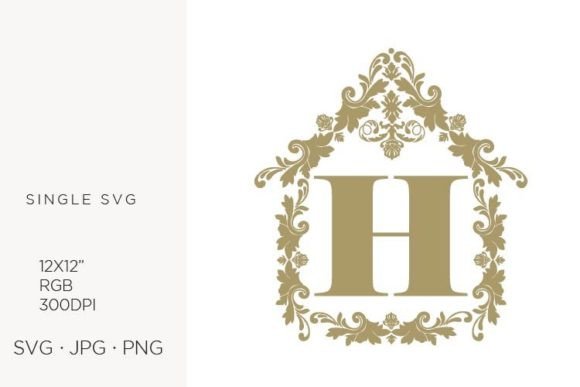
The core identity of this asset lies in its fusion of two distinct visual languages: the structural stability of a house silhouette and the fluidity of an ornamental monogram. Unlike standard serif or sans-serif fonts where the letter "J" exists in isolation, this emblem integrates the letter into a cohesive shape that suggests shelter, home, or heritage. The design relies on clean lines and balanced proportions, typical of high-quality vector graphics created in Adobe Illustrator.
What makes the House Like Ornamental Emblem, Letter J distinct is its scalability and resolution independence. Because the file is constructed as a vector, the intricate details of the ornamentation remain sharp regardless of how large the image is scaled. This is a critical differentiator from raster-based images, which can become pixelated when enlarged. The artwork is delivered within a 12x12 inch artboard, a standard size that accommodates most print and web layouts without requiring immediate resizing. The inclusion of RGB color palettes ensures vibrant display on screens, while the 300 dpi JPG and PNG options provide high-fidelity previews for print workflows.
Comparing Vector Assets with Raster Alternatives
When evaluating design resources, the choice between vector and raster formats is often the primary decision factor. The House Like Ornamental Emblem, Letter J is fundamentally a vector asset, saved as an SVG file compatible with version 10 of Adobe Illustrator. This offers significant advantages over raster-only alternatives like standard JPEGs or low-resolution PNGs found in stock photo libraries.
Raster images are composed of a fixed grid of pixels. While they are excellent for photography, they struggle with line art and logos. If a designer attempts to stretch a raster "Letter J" monogram to fit a billboard or a large banner, the edges will blur, and the ornamental details will degrade. In contrast, the vector nature of this emblem means the mathematical curves defining the house shape and the letter can be recalculated at any size. For a project requiring both a small favicon for a website and a large vinyl decal for a storefront, the vector format eliminates the need to purchase multiple versions of the same image.
However, there are tradeoffs. Vector files require specific software to edit effectively. While the package includes a 300 dpi JPG and a transparent PNG for immediate use in programs like Microsoft Word or Canva, unlocking the full potential of the House Like Ornamental Emblem, Letter J requires access to vector editing tools. Users without Adobe Illustrator or similar software (such as Affinity Designer or Inkscape) may find the SVG file less useful than a pre-rendered high-resolution image, depending on their editing needs.
Technical Specifications and File Formats
The delivery package for this artwork is structured to accommodate various stages of the design process. It includes three distinct file types:
- SVG File: The source vector file, editable in Adobe Illustrator (saved as version 10). This is the master file for customization.
- JPG File (300 dpi): A high-resolution raster image suitable for printing on paper items where transparency is not required.
- PNG File (300 dpi): A high-resolution image with a transparent background, ideal for overlaying onto colored stationery or digital backgrounds.
This multi-format approach addresses a common limitation in digital downloads: the inability to use a single file across all mediums. By providing both editable vectors and ready-to-print rasters, the asset bridges the gap between professional design workflows and quick-turnaround DIY projects.
Evaluating Use Cases: From Branding to Craft
The versatility of the House Like Ornamental Emblem, Letter J extends across several industries and creative pursuits. Its design language—combining a house motif with a monogram—naturally aligns with themes of real estate, family heritage, hospitality, and personalization.
Logo Design and Branding: For businesses starting with the letter "J," such as a jewelry shop, a law firm, or a boutique hotel, this emblem offers a head start. Instead of commissioning a custom logo from scratch, which can be time-consuming and expensive, a designer can adapt this vector. The ornamental style lends itself well to luxury or traditional brands. However, for modern tech startups seeking a minimalist aesthetic, the detailed ornamentation might feel too heavy, suggesting that this specific style has a defined niche rather than universal appeal.
Printed Paper Items and Stationery: The 300 dpi resolution makes the included JPG and PNG files suitable for high-quality printing. This is particularly relevant for invitations, announcements, and handmade cards. A user creating wedding invitations could utilize the transparent PNG to place the emblem on a textured digital background, ensuring crisp edges when printed. Similarly, the vector file allows for adjustments in line weight to suit different paper stocks; thicker lines may work better on cardstock, while finer lines might get lost on glossy finishes.
Handmade Craft and Party Decor: For the adult crafter aged 20–50, who may be engaging in scrapbooking, vinyl cutting, or wall art creation, this asset is highly functional. Vinyl cutters and laser engravers rely heavily on vector paths. The SVG file can be imported directly into software like Cricut Design Space or Silhouette Studio to cut the emblem out of vinyl for decals or to engrave it onto wood plaques. The 12x12 inch artboard size is also convenient for crafting, as it matches the dimensions of many standard scrapbook papers and cutting mats.
Decision Factors: When to Choose This Emblem
Selecting the right design asset depends on the specific goals of the project. The House Like Ornamental Emblem, Letter J is the right choice when:
- Scalability is a priority: If the design must appear on both a business card and a large banner, the vector format is essential.
- Customization is required: If the user needs to change the color scheme, adjust the thickness of the lines, or modify the internal details of the house shape, the editable SVG is necessary.
- The theme fits the aesthetic: Projects requiring a classic, elegant, or heritage-focused look benefit from the ornamental style. It is less suitable for ultra-modern, brutalist, or purely geometric designs.
- Budget and time are constraints: Using a pre-made vector element is significantly faster and more cost-effective than hiring a designer for a bespoke illustration, provided the existing style aligns with the brand vision.
Conversely, readers may need to look for alternative options if:
- The letter does not match: This asset is specifically for the letter "J." While some vector programs allow for morphing letters, the structural integrity of the house shape is tied to the geometry of the "J." Finding a similar emblem for a different initial would require searching for a different set.
- A completely unique IP is needed: Stock vector elements, even when customized, carry a risk of similarity to other works. For major corporate rebranding where total uniqueness is legally and strategically vital, a fully custom commission might be safer.
- Software limitations exist: If the user lacks access to vector editing software and does not need to alter the design, a simple raster download might suffice, though they lose the long-term flexibility of the vector file.
Practical Considerations for Implementation
Implementing the House Like Ornamental Emblem, Letter J effectively requires attention to detail regarding color and context. The RGB color palette provided is optimized for screen viewing. For print projects, especially those involving professional offset printing, users should verify that the colors are converted to CMYK to ensure accurate reproduction. The 300 dpi JPG and PNG files are sufficient for standard home and office printers, but commercial printers may request the original vector file to maintain absolute quality control.
Furthermore, the ornamental nature of the design means it contains fine details. When applying this to physical media, such as fabric for party decor or embossed paper, the texture of the material interacts with the ink or cut lines. Testing a small print run before committing to a large batch of invitations or merchandise is a prudent step. The transparency of the PNG file allows for layering, but users should ensure the background color of their project provides enough contrast for the emblem to remain legible.
Conclusion on Value and Fit
The House Like Ornamental Emblem, Letter J represents a balanced solution for those seeking professional-grade design elements without the overhead of custom illustration. Its strength lies in the combination of a flexible vector format and a versatile, thematic design. By offering multiple file types, it caters to both the technical needs of graphic designers and the immediate usability required by crafters and small business owners.
While it is not a one-size-fits-all solution for every design challenge, its specific application in branding, stationery, and decorative arts makes it a valuable resource. For adults comparing options for their next creative project, weighing the benefits of vector scalability against the specific stylistic requirements of their brand will determine if this emblem is the optimal choice. Ultimately, the decision rests on whether the ornamental house motif aligns with the intended message and whether the technical capabilities of the user match the potential of the file formats provided.